
Strength Training for Women Over 40: Where to Start
You keep hearing that you should lift weights. Then you walk past the weight room, see the racks and the barbells, and head back to the treadmill.
If that’s you, you’re in good company. Strength training for women over 40 is one of the best things you can do for your body, and almost nobody gets shown how to start.
So here’s where I’d tell a friend to begin.
Why strength training matters for women over 40
After 30, you lose a little muscle every year unless you train it. Perimenopause and menopause make it easier to lose muscle and gain fat, so by your 40s and 50s you feel the difference.
It shows up in small ways first. The stairs feel longer. The bag of dog food feels heavier. Getting up off the floor takes a hand on the couch.
Lifting weights is how you get that strength back. It builds muscle, and your bones stay stronger when you give them something to work against. It also helps the scale, which I covered in Why Is It So Hard to Lose Weight After 40?
Walking and cardio are good for you. Keep them. They just don’t do this job.
Will lifting weights make you bulky?
No. This is a worry I hear a lot, and I get it.
Getting big takes years of very heavy training and a lot of eating on purpose. It doesn’t happen by accident, and it doesn’t happen from two or three workouts a week.
What you’ll notice is different. You feel firmer, your clothes fit better, and you carry all the groceries in one trip without thinking about it.
Weight training for women over 40: five movements to learn first
You don’t need twenty machines. You need five movements, because they cover everything your body does in a normal day:
- Squat. Sitting down and standing back up. Start with a chair behind you and no weight at all.
- Hinge. Picking something up off the floor with your hips and legs doing the work. It’s how you lift a laundry basket without your back doing all the work.
- Push. A push-up with your hands on a counter or a bench counts. So does pressing dumbbells overhead.
- Pull. Rowing a weight or a band toward you. It’s the best thing I know for posture after a day at a desk.
- Carry. Pick up something heavy in each hand and walk with it. Simple, and it works your grip, your core and your legs at once.
Learn these with light weights first. Good form comes before heavy weights, every time.
How heavy should you lift?
Start lighter than you think you need. The first couple of weeks are for learning the movements, not for proving anything.
Once a movement feels smooth, pick a weight that feels hard by the last few reps while your form still looks good. Two or three sets of 8 to 10 reps is a fine place to begin.
When that gets easy, add a little weight. That one habit is what makes you stronger. The jumps are small, and they add up.
A little soreness for a day or two is normal when you’re new. Sharp pain is not, and I’ll come back to that below.
A simple first week
Two strength workouts a week is enough to start. A first week looks like this:
- Monday: strength workout, one of each of the five movements, about 30 minutes
- Tuesday: 30-minute walk
- Wednesday: rest, or an easy walk
- Thursday: strength workout, the same five movements
- Friday: 30-minute walk
- Weekend: something active you enjoy, like a hike, yard work or time with the grandkids
Give it a month. When two workouts feel like part of your week, add a third.
Strength training for women over 50
If you’re in your 50s or 60s and have never lifted, you haven’t missed your chance. Your muscles still respond to training. They just need you to start.
The plan is the same five movements. What changes is the pace. Recovery takes a little longer than it did at 30, so keep a day between strength workouts and protect your sleep.
Menopause can make all of this feel harder. Your joints feel different, your energy comes and goes, and sleep gets choppy. None of that means you should stop. It means the plan should fit the day you’re having, and that’s a normal part of training in your 40s, 50s, 60s and up.
When to talk to your doctor
If you have a health condition, a recent surgery, or you’ve been told your bone density is low, check with your doctor before you start and ask if there’s anything to avoid. The same goes for menopause symptoms that are wearing you down. Your doctor handles the medical side.
See a doctor or physical therapist first if you have sharp pain, pain that started with a fall or injury, swelling, numbness or tingling, or pain that keeps getting worse.
For the everyday aches, like a cranky knee or a stiff shoulder, you don’t have to sit out. Tell your coach what’s bothering you and we’ll modify the movement.
Where a coach comes in
The movements aren’t the hard part. Walking in alone, not knowing if you’re doing it right, is the hard part.
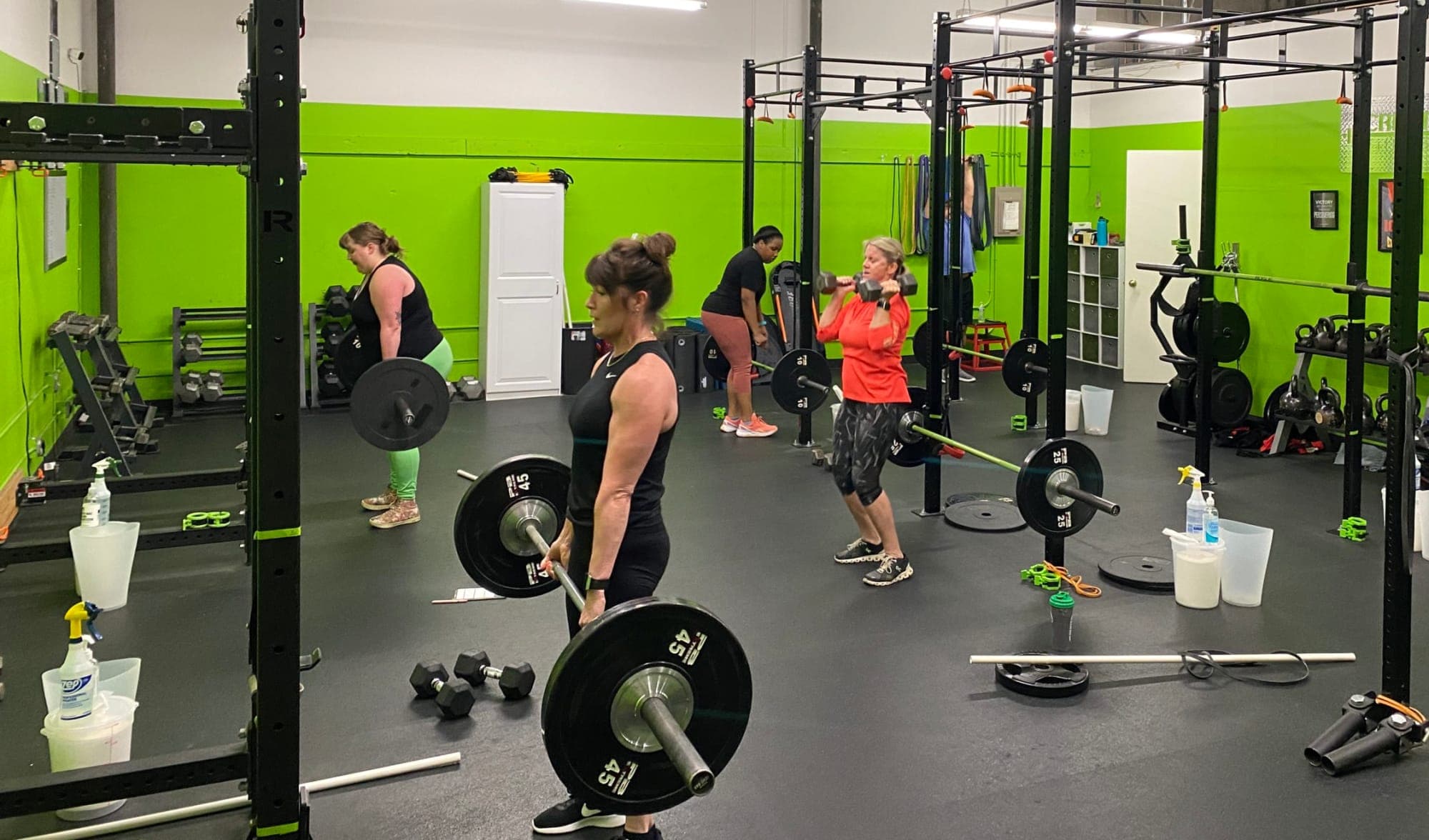
That’s what our personal training for women in Kent and Puyallup takes care of. You’ll have a coach with you every time you train. Your coach plans every workout, runs you through it, and helps with form, modifications and weights.
Every workout has three parts: a Warm-Up, then Dynamic Prep, then the main workout. So you’re never guessing what comes next.
Both gyms are for everyone. Men and women train together, and you’ll find all ages, shapes and sizes. New people start with a free 1 on 1 session, so your first day is just you and a coach.
We specialize in helping adults 40 and up. Here’s how Fitness Over 40 works.